GIS – The New Term Taking Over Traditional Land Survey
What Is Geospatial, GIS, and What It Entails?
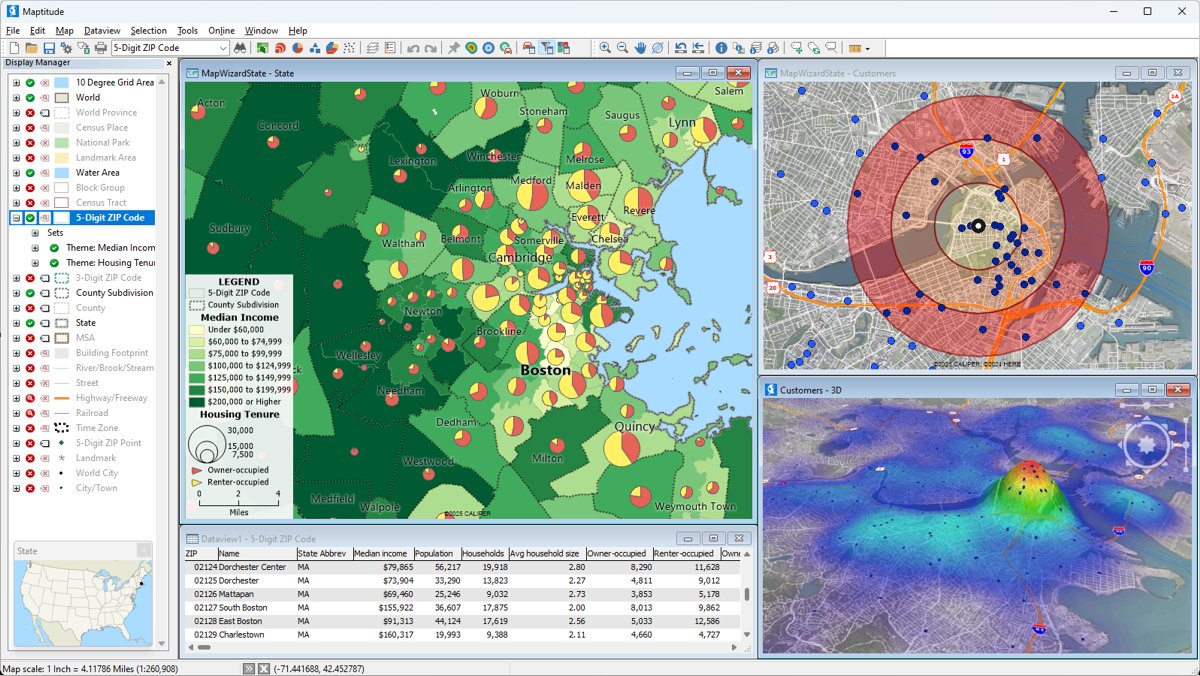
In recent years, the term GIS has become increasingly popular, often appearing to replace or expand upon what we traditionally knew as land surveying. While traditional surveying remains essential, Geospatial technology and GIS (Geographic Information Systems) are revolutionizing how we collect, analyze, manage, and visualize spatial data.
So what exactly do Geospatial and GIS mean? And how are they transforming the surveying profession?
What Is Geospatial?
Geospatial refers to any data or information that has a geographic or location-based component. Simply put, if information can be tied to a specific location on Earth, it is geospatial.
Examples of geospatial data include:
GPS coordinates
Satellite imagery
Land parcel boundaries
Road networks
Elevation models
Utility infrastructure locations
Geospatial technology combines tools such as:
Global Positioning System (GPS)
Remote sensing satellites
Drones (UAV mapping)
Digital mapping software
Spatial databases
It allows professionals to capture, store, and analyze location-based information with high precision.
What Is GIS?
GIS (Geographic Information System) is a system designed to collect, store, manage, analyze, and present geospatial data.
A GIS does more than create maps — it connects data to geography and reveals patterns, relationships, and trends.
Popular GIS software platforms include:
ArcGIS
QGIS
Google Earth
With GIS, users can:
Overlay multiple data layers (roads, land use, utilities, population)
Perform spatial analysis
Generate digital maps
Model terrain and environmental changes
Support planning and decision-making
Traditional Land Surveying vs GIS
| Traditional Land Surveying | GIS |
|---|---|
| Focuses on precise land measurement | Focuses on spatial data management and analysis |
| Uses total stations and levels | Uses software, satellites, drones, GPS |
| Produces boundary maps | Produces interactive digital maps and models |
| Field-intensive | Combines field and office-based digital analysis |
Traditional surveying determines where things are physically located with high precision, especially for legal boundaries and construction.
GIS, however, answers:
What is happening at that location?
How does it relate to surrounding features?
What patterns or trends exist?
What decisions should be made?
Rather than replacing surveying, GIS builds on it.
What GIS Entails
GIS is not just mapping — it is an entire workflow that includes:
1. Data Collection
Field surveys
GPS data capture
Drone imagery
Satellite data
Existing maps and records
2. Data Management
Spatial databases
Data cleaning and validation
Georeferencing
3. Spatial Analysis
Buffer analysis
Overlay analysis
Network analysis
Terrain modeling
4. Visualization & Reporting
2D and 3D maps
Dashboards
Interactive web maps
Spatial reports
Industries Using GIS Today
GIS has expanded far beyond land surveying. It is now used in:
Urban and regional planning
Environmental management
Agriculture (precision farming)
Oil and gas pipeline management
Telecommunications
Disaster management
Transportation planning
Smart cities development
Governments and private companies rely heavily on GIS for infrastructure development and policy-making.
Why GIS Is Taking Over Traditional Terminology
The term “GIS” is becoming dominant because:
Digital transformation is replacing paper-based mapping.
Decision-making now requires spatial analysis, not just measurement.
Drones and satellite data have expanded mapping capabilities.
Data integration is essential in modern infrastructure projects.
Surveyors today are increasingly becoming:
Geospatial analysts
GIS specialists
Remote sensing experts
Spatial data scientists
The profession is evolving.
The Future: Surveyor + GIS = Geospatial Professional
The modern land professional is no longer just a field measurer but a geospatial data expert.
Traditional surveying provides the foundation of accurate measurement.
GIS provides intelligence, analysis, and decision support.
Together, they form the backbone of:
Smart infrastructure
Sustainable development
Digital land administration
Modern urban planning
Final Thoughts
GIS is not replacing land surveying — it is expanding it.
While traditional surveying ensures precision and legal accuracy, GIS transforms spatial data into powerful insights. The future belongs to professionals who understand both field surveying techniques and advanced geospatial analysis.
As technology continues to advance, one thing is clear:
Geospatial and GIS are not just trends — they are the future of land and infrastructure management.